Does Your Crawl Space Affect The Air Quality In Your Home?

When you think about air pollution, what typically comes to mind?

It's true. Cows generate 15% of global greenhouse gas emissions every year.
Vehicle emissions? Manufacturing plants? Cow farts, even?
Well, you're not far off the mark. Those factors do in fact contribute to air pollution, but have you ever considered what causes indoor air pollution?
You should be concerned about your indoor air quality, and if you've stumbled upon this blog, there's a high chance you have a crawl space
Here's the deal. Approximately 60% of the air in your home originates from the crawl space, and according to the United States Environmental Protection Agency (EPA), the average American spends around 90% of their time indoors.
While I'm no mathematician (actually, I'm a writer specializing in air quality – hi nice to meet you), it's clear that those stats point to the obvious: it's crucial to maintain good air quality in your crawl space for the well-being of your home.
As experts in foundation and crawl space repair, we get asked a lot of questions about crawl spaces, indoor air quality, and everything in between. So we put this blog together to answer your most burning questions. We'll dive into the impact of indoor air quality on your health, how crawl space air moves through your home, how to identify poor indoor air quality, and how to tell if it's coming from the crawl space. Let's dive right in.
What is air quality, and how does it affect you?
Before we get into the nitty-gritty, let's first define the basics, so we're all on the same page.
Indoor air quality defined
Indoor air quality (IAQ, for short) refers to the condition of the air inside enclosed spaces, such as homes, workplaces, and public buildings, including the presence of various pollutants and allergens.

Particulate matter often looks like this. Dust dancing in the air right after you lift up your favorite blanket.
Your indoor air can be polluted with a wide variety of substances, including:
- Particulate matter: These microscopic particles float in the air and come from things like dust, pet dander, and cooking.
- Volatile organic compounds (VOCs): Organic chemicals that vaporize into the air, often released by common household products like paints, cleaning supplies, and building materials.
- Mold and mildew: Microorganisms that live in damp environments (like that crawl space of yours) and release airborne spores, which, when breathed in, can cause respiratory issues.
- Carbon monoxide (CO): A colorless, odorless gas produced whenever fuel burns, which can be deadly in high concentrations.
- Radon gas: A naturally occurring, radioactive gas that comes from the natural decay of uranium in soil. It often seeps into buildings and can increase the risk of lung cancer.
Okay, now that we know what indoor air quality is, let's discuss how these pollutants can affect your health if you breathe them in over an extended period.
How does indoor air quality impact your health?
The quality of the air we breathe has a huge impact on our health. Here's the thing, though. Breathing in a pollutant once isn't a big deal. Even twice, you're fine.
The real problem is when those pollutants live in your home.
If they're present day after day, they're coming from somewhere, and they usually don't disappear on their own. That means you're breathing in the same bad air over and over again, and that's when it starts to affect your health.
Poor indoor air quality has been linked to issues like:
- Respiratory problems
- Headaches and fatigue
- Skin irritation
- Heart disease
- Lung cancer

This is the stack effect, a process in which hot, humid air leaves the home through your attic, and new air is pulled upwards through the crawl space. If your crawl space air is filled with musty odors and allergens such as mold spores, dust mite waste, animal dander, and others, these elements will enter your living space and affect your quality of life.
How does the crawl space affect indoor air quality?
Now that we are all on the same page about IAQ, let's talk about your crawl space. The crawl space is not a hot spot to hang out in, but it is a hot spot for your overall indoor air quality.
There are a few ways the crawl space influences the air you breathe, including:
1. Air movement
Your crawl space isn't sealed off from the rest of your home. Air moves between the crawl space and your living areas through vents, gaps, and ductwork.
2. Moisture and humidity
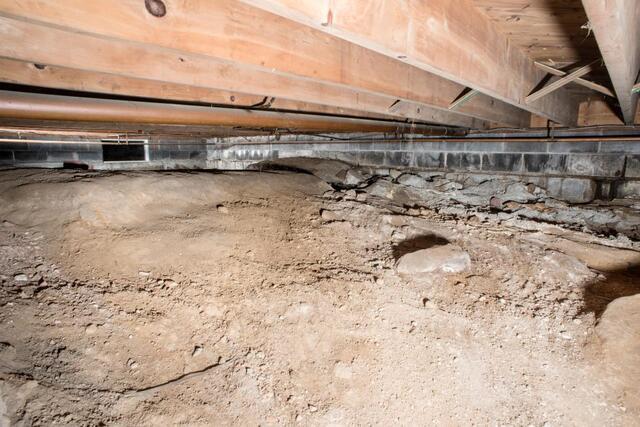
Most crawl spaces have exposed dirt floors. That dirt releases moisture into the air, which then rises into your home.
More moisture = higher humidity. And higher humidity creates the perfect environment for:
- Mold and mildew
- Dust mites
- Pests
All of which release allergens and pollutants into your air.
3. Poor insulation and air sealing
Many crawl spaces aren't properly insulated or sealed. That leads to temperature swings and outside air sneaking in where it shouldn't.
When warm, humid air hits a cooler crawl space, condensation forms. Condensation leads to mold. Mold releases spores. Those spores move up into your home.
How do you know if you have poor indoor air quality?
There are a few ways to figure out if your home has poor indoor air quality and the good news is, you can determine it yourself without having to call an expert.

Set the hygrometer in a common area for at least 24 hours. Try to avoid setting it in bathrooms or kitchens as the humidity tends to fluctuate when you cook or shower.
- The sniff test: If your home smells musty, mildewy, or anything of that nature, it's safe to say you have an issue.
- Hygrometer: A hygrometer is a tool that measures the amount of humidity in the air. They're inexpensive and easy to use. Just place it in a room in your house, like a living room or bedroom (try to avoid kitchens or bathrooms, as the moisture levels in the air can fluctuate in those areas). If the levels come back high, then you know you have an air quality issue.
- Radon test kits or radon monitor: This inexpensive tool will test the radon levels in your house and indicate if your home has high radon levels.
How to improve your home's indoor air quality
If you suspect your indoor air quality at home is poor, there are a few ways to improve it.
- Better air filtration. Some pollutants (like radon) are extremely small and can slip through standard filters. Upgrading your filtration helps catch what basic filters miss.
- Crawl space encapsulation. The best thing you can do for your crawl space is to encapsulate it (and no, we're not just saying that because we're a crawl space company). Encapsulation seals your crawl space from the outside using heavy-duty vapor barriers on walls and dirt floors. It reduces moisture, blocks mold growth, keeps pests out, and improves air quality throughout the home.

- Dehumidifier. A dehumidifier removes excess moisture from the air and pumps it outside, keeping humidity in check and mold from taking hold.
- Depressurization. When it comes to reducing radon levels in your home, depressurization is the best solution. This method involves creating a pathway for radon gas to exit your home safely and ensure it's vented outside. These systems are designed to maintain lower air pressure beneath the foundation than indoors, preventing radon gas from entering living spaces. Make sure to use a professional radon mitigation contractor for this type of work, though. They will assess the specific conditions of your home and determine the most suitable depressurization method for your situation.
The most important step: don't ignore it
If you're noticing signs of poor indoor air quality, and you think it's coming from your crawl space, it's time to take action. Ignoring these issues won't lead to them going away (no matter how much you want that), and instead, will only make them get worse. Here at Thrasher, we offer services to improve indoor air quality, including crawl space encapsulation and dehumidifier installation.
If you are in our service area and would like to chat about your indoor air quality, our team at Thrasher Foundation Repair is here to help. Contact us today by starting a chat in the bottom right corner, filling out this form, or calling us at 1-800-827-0702.
Now that you know about how crawl spaces affects your indoor air quality, don't you wanna know everything there is to know about crawl space encapsulation? We thought so... check out, "What is crawl space encapsulation? Everything you need to know."
Article Categories: